

Once upon a time, there was a family who loved books. They had shelves filled with stories of adventure, humor, and love. When their baby girl was born, they couldn't wait to share their passion for books with her. But as she grew into a one-year-old, they realized that encouraging her to love books was not as easy as they thought.
Parents of one-year-olds trying to develop a love for reading in their little ones often find it difficult to work with short attention spans and toddler destructiveness. However, reading to your child from an early age can significantly benefit cognitive development, so persevering is worthwhile!
But how can parents keep encouraging their one-year-olds to sit for storytime without forcing books on them? You're in the right place. In this article, we will list ten tips for encouraging your one-year-old's love of books and three myths about reading to one-year-olds that shouldn't stop you.
Why Reading to Your One-Year-Old Matters
According to a 2022 study published in the Journal of the American Board of Family Medicine, babies who were read one book a day consistently in the first year of life had higher skills in expressing themselves and understanding others (source).
In simpler terms, reading to your child early can improve her language skills, increase her vocabulary, and positively impact her future academic performance.
Despite the benefits of reading to children, only around half of all kids between birth and five years old are read to daily by a parent or family member (source). Moreover, one in every five children enters kindergarten in the U.S. with skills two to three years below their grade level (source).
By fourth grade, about 34% of students are below the basic reading level, dropping to 27% by eighth grade (source).
Obviously, poverty and the language spoken at home play considerable roles in these statistics. For instance, in 2021, 21% of school-aged children spoke a language other than English at home (source). Poverty, the parents' literacy, and available educational resources throughout the year all contribute to the issue as well (source).
How we spend our time and money matters for our children. If you struggle to access age-appropriate books to read to your child, find your nearest library or high school and ask about programs in your area. So many outstanding programs have risen up to address this challenge; the only hurdle is getting connected.
10 Tips for Encouraging Your One-Year-Old's Love of Books
So, you've got a one-year-old acting his age, and you know that inspiring a love of reading is essential to developing his language and thinking skills. But how do you get him to actually sit and listen or participate in the reading?
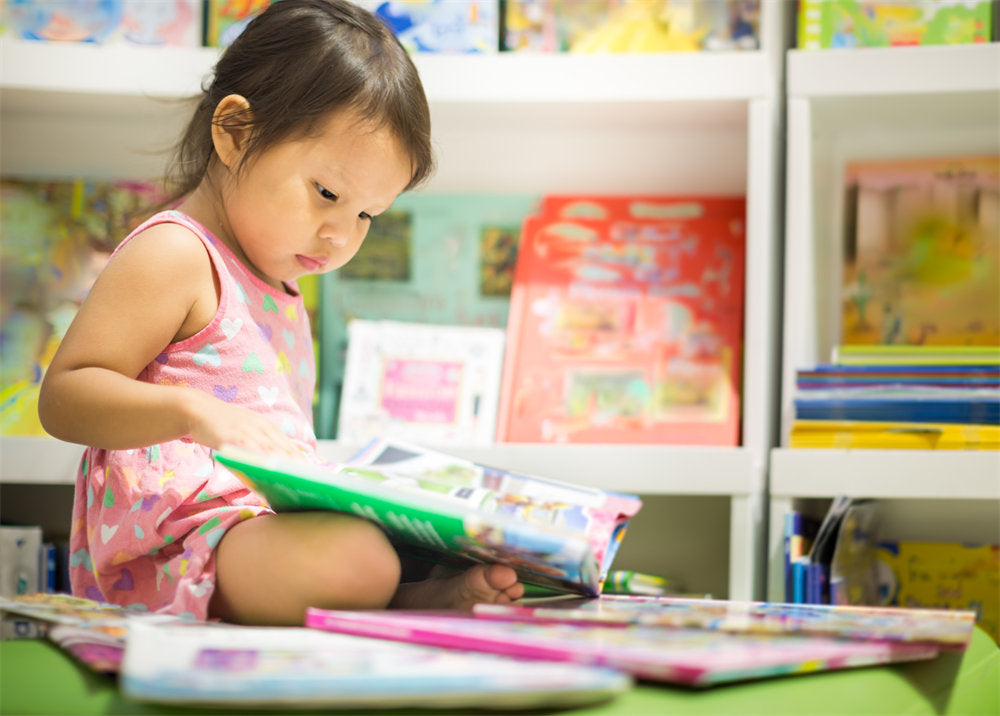
We've got a range of tips for helping you encourage your one-year-old's love of books.
1. Make Reading Fun
When it comes to reading to your one-year-old, you've got to think like a one-year-old. Everything around the room is something that can be grabbed and explored, but this book is static and "untouchable." Of course, she feels bored with books!
But if you start using silly voices and sound effects, this reading thing suddenly becomes more entertaining. If you let her try turning the pages or ask her to point to things in the pictures, the story seems more fascinating, too.
Don't worry about looking crazy while reading to your little one; the more animated you are, the better! Load up on fun, goofy ideas in Turning Books Into Adventures Your Little One Will Never Forget.
2. Choose Age-Appropriate Books
Choosing age-appropriate books is crucial when encouraging your one-year-old's love of books. Board books with bright colors, fairly simple pictures, and easy-to-understand stories are perfect for this age group.
You can also choose books with textures, flaps, or pop-ups to add a tangible element of surprise and make the reading experience more interactive. Though these books are easier to destroy with curious hands, they are engaging and fun for little minds.
Collecting a range of different book types also keeps things fresh for your wee one. Add books with a lot of rhyming, some that require singing or animal sounds, and texture books to add more sensory exploration.
3. Read at the Right Time
Reading at the right time can make a big difference in your child's interest in books. One-year-olds are often full of energy, so choose a time when your little one is calm and relaxed, like when they're munching on a snack or being strapped into a car seat.
Some one-year-olds enjoy reading a book while cuddling with you before naptime or bedtime, while others prefer to read when feeling content after a meal. Whatever time you choose, ensure you are also calm and not likely to get annoyed or frustrated as your one-year-old inevitably wiggles around.
You can also try reading out loud while your one-year-old plays contentedly with passive toys. Though she won't be looking at the pictures, she will likely listen while playing, especially if you read with voices and sound effects.
Passive toys do not move or make noise in and of themselves. These could be sensory, Montessori, Waldorf, or other toys. Not sure about the difference? Check out Are Montessori and Sensory Toys the Same Thing?
4. Create a Reading Routine
Creating a reading routine can help your one-year-old develop a love for books. You can set aside a specific time each day for fun reading, or make it part of your daily routine. For example, you can read a book before nap time or bedtime.
Having a consistent reading routine can also help your child associate reading with a positive and comforting experience. Moreover, regularly reading to your wee one is a bonding experience that you'll only really enjoy in this season of life.
Once your little one goes off to preschool or school, you won't have as much time to invest in reading to your child. Other activities will crop into your schedule. So, soak up this sweet bonding time while you can!
5. Let Your Child Choose the Book
There's nothing like making choices on what to read to make your one-year-old feel special and involved in reading! You can offer your little one a few options to choose from or take him to the library to explore.
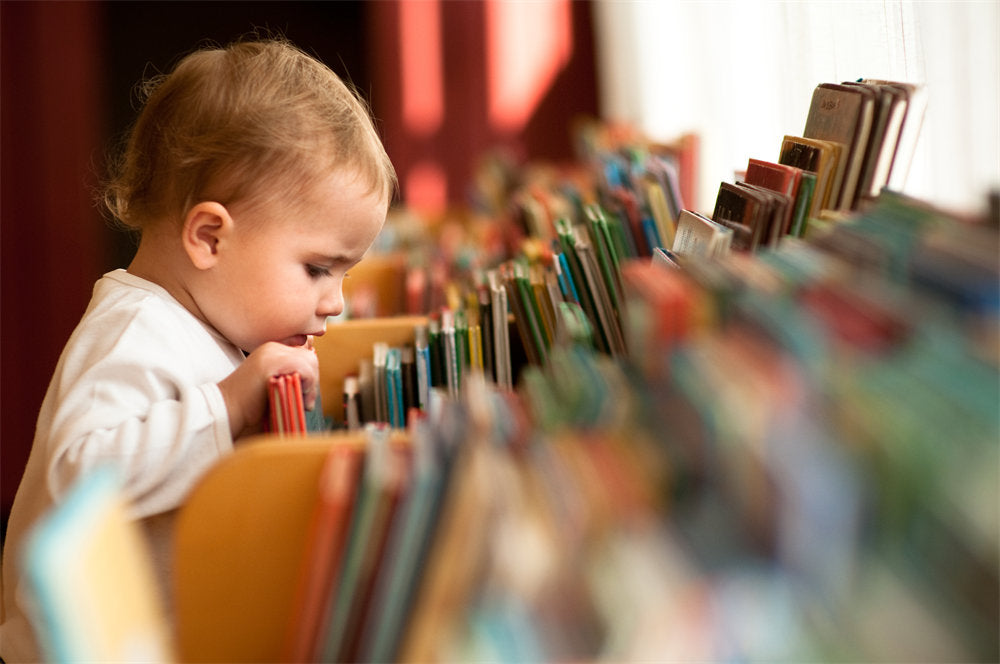
Such experiences will help your one-year-old practice decision-making skills and independence. If your sweet toddler becomes a bit power drunk and tries bossing you around, you can practice saying, "Please!"
It won't be long before your one-year-old will be able to pile up some book options at the library independently!
Making choices is a vital part of resilience. Learn how to lay the best foundation for your child in Encouraging Resilience: 7 Effective Ways to Build Resilience From the Start.
6. Use Props and Flashlights
Using simple props can make reading more interactive and engaging for your one-year-old. For example, if you are reading a book about animals, you can use stuffed animals or animal figurines to help bring the story to life. Props can also help with your child's imagination and creativity.
Likewise, turning out the lights or sitting in a closet to read books with a flashlight is an incredibly unique reading experience for one-year-olds. Such a setting also inspires plenty of ways to make reading more engaging with your voices and movements.
7. Build a Reading Nook with Accessible Books
Building a reading nook with books accessible to your one-year-old will make looking through books tantalizing. This could be as proper as a corner with a little bookshelf of age-appropriate books and a comfy, toddler-sized chair, or as simple as a giant cardboard box decorated like a tiny library.
Do you remember your favorite hideout as a child? Back then, it seemed like the most stunning playhouse or impenetrable fort. But through your adult eyes, that hideout was probably tiny, dirty, and rickety with musty books or dangerously janky chairs.
Kids have brilliant imaginations that help them play through scenarios and connect with others. Your one-year-old is on the cusp of engaging that imagination, and reading to him will open that door wide open.
So, long story short, don't worry about making the "perfect" reading nook; your one-year-old will fill in the gaps with her imagination over time!
8. Make Connections to Real Life
Connecting to real life can help your one-year-old better understand and relate to the story. For example, if you are reading a book about going to the beach, you can talk about your last trip to the beach or show her pictures of the beach.
Making connections to real life can also help with vocabulary and language development. Babies and toddlers spend the first two years listening to family members speak and experimenting with making sounds and syllables.
One-year-olds typically become more vocal and explode in vocabulary and more precise pronunciation between two and four years old. The more input you give in the first two years of life by reading books and making connections to real life, the more vocabulary your little one will have early on.
9. Be Patient
Some days, sitting down with your one-year-old to read a story is an absolute joy. For others, it's like pulling teeth. Try to be patient and go-with-the-flow while reading to your one-year-old. It's okay if you don't finish the whole book in one sitting, and it's okay if your little one wants to fixate on blocks as you read.
Try mixing up the setting by reading outside in a hammock or in a car to help build your patience. Some children take longer to develop an interest in reading, so don't get discouraged if your one-year-old doesn't seem interested at first.
Keep reading to him, and eventually, he may develop a love for books. But if you often make it a stressful situation, you may snuff that desire to explore through reading before it gets going.
If your one-year-old is acting out in fussiness or tantrums due to sleeplessness, read The Ultimate Guide to One-Year-Old Sleep: Tips and Tricks for Busy Parents. Working storytime into a bedtime routine may be the route to go for you at this stage.
10. Set an Example
If your child sees you reading for pleasure, she is more likely to develop a love of books herself. Making reading a part of your day, even for a few minutes, will eventually pique your child's curiosity. One day, it could be a nostalgic memory of you.
On the same line of thought, the things you read will also teach your child something later in life. If you love reading romance novels, the odds that your older child will try reading a romance novel at least once are high.
What goes in will eventually come out, and what your child sees you doing will be reflected in some way at some point. Learn more about observational learning and how your habits impact your child's development in Be Careful, Mommy, Daddy, What You Say: Building Your Child's Identity.
3 Common Myths About Reading to One-Year-Olds
As with anything child-related or challenging, there are numerous myths about reading to one-year-olds. Since we've already looked at some facts and statistics in this article, let's also take a look at some myths.

Here are three myths about reading to one-year-olds that I've heard often throughout motherhood:
1. One-Year-Olds Are Too Young To Enjoy Books
While one-year-olds may not understand the plot of a story, they can still enjoy the pictures and the act of turning the pages. Reading to your one-year-old can also help with their language development and introduce them to the concept of reading.
This myth is grounded in toddlers' short attention spans. While it's true that one-year-olds have short attention spans, you can still encourage them to enjoy books. Choose books with simple, colorful pictures and short, easy-to-understand stories.
Again, the more animated and silly you are while reading, the more engaging the books will be for kids of any age!
2. One-Year-Olds Don't Understand What's Going On In the Story
No, not at first. But that understanding comes with practice. If you wait until two or three years old to start reading to your child, you will find that your toddler will struggle to understand the story and resist you more.
Setting solid reading habits now has many benefits (as we've discussed in this article). Starting later just means more difficulty and delayed vocabulary learning now. Also, it will probably be more difficult for you to get into a reading habit with your child later.
3. One-Year-Olds Don't Need To Be Read To Every Day With a Variety of Books
Reading at least one book to your child every day, from the first year of childhood onward, significantly benefits your child's cognitive development (source). These early reading times lay the foundation for vocabulary outside the home.
They explore feelings, situations, and ideas your child won't know until later. Even if your one-year-old doesn't seem interested in books right now, reading to her every day will eventually pay off.
Moreover, choosing a variety of age-appropriate books is integral to expanding vocabulary, imagination, and ideas. Even though your one-year-old can listen to the same song fifty times in one day with glee, that lack of variety is not beneficial in the long run.
You can vary topics, themes, and picture styles, as well as the way you read books (setting, voices, body language).
In a Nutshell
Encouraging your one-year-old's love of books can be a fun and rewarding experience. It provides loads of cognitive benefits and also gives you an opportunity to bond with your little one. After all, he's not a baby anymore--time flies!