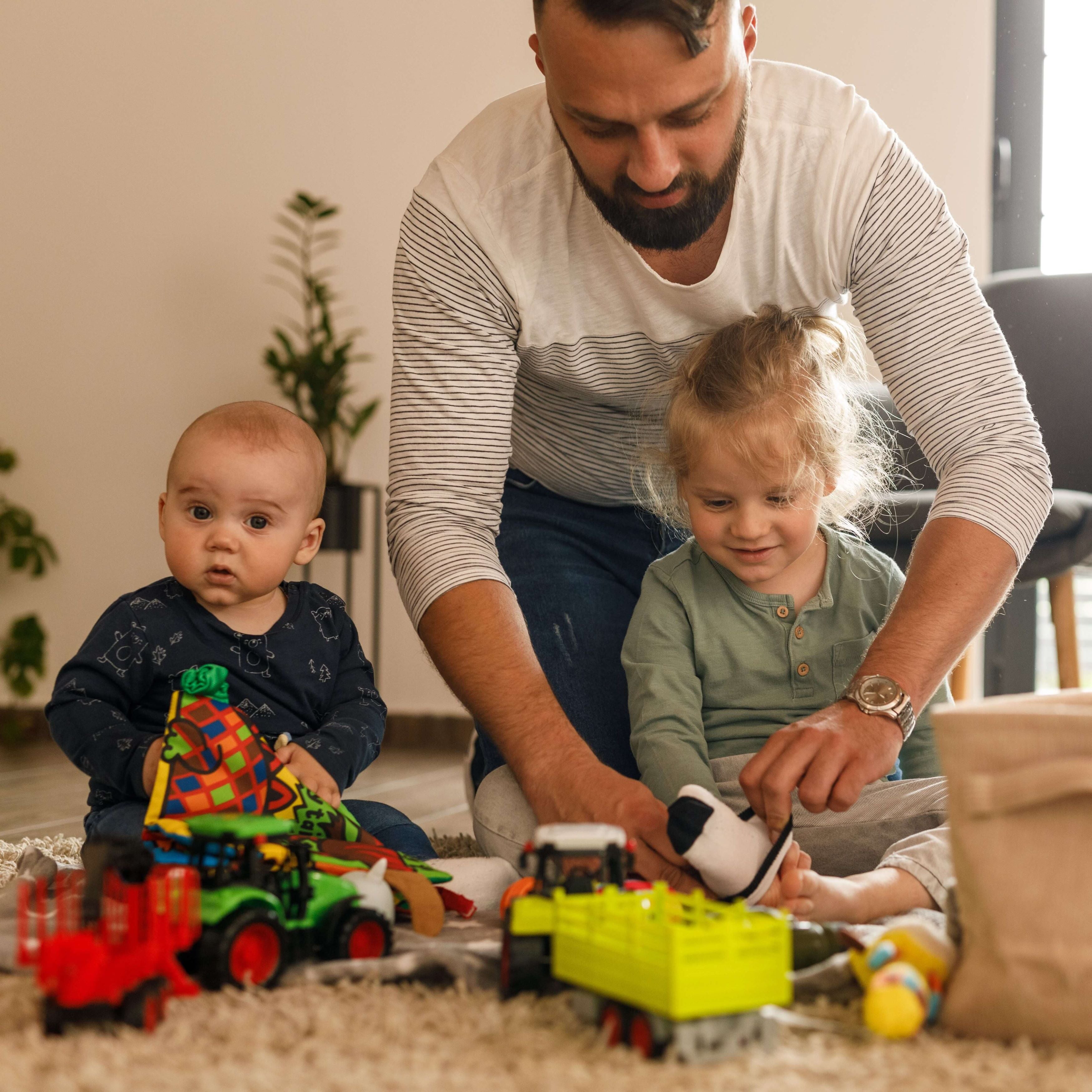


Every toddler parent has experienced this: You buy a cool toy, surprise your toddler with it, and watch as your toddler plays with the box more than the toy. It's so lame! Or is it?
Toddler toys come in a vast array of designs, price points, and development focuses, but toddlers may quickly move on to something else. Many toddler toys struggle to keep toddlers engaged, so knowing the common pitfalls to avoid can help parents save some money.
Learning a bit about your toddler's brain and developmental track can help you choose toys that are more age-appropriate and actually fascinate your tiny tot for longer. So much happens in these short years, but you can save quite a bit by educating yourself before marketing influences your buying choices.
1. Toddlers Lose Interest in New Toys Quickly
One of the most ridiculous things about birthday gifts, Christmas presents, or any random toy gifts given to my toddlers is the hours of fun they had with the boxes compared to the time they spent playing with the toys. What gives?
Toddlers' imaginations are running wild with possibilities, exploration, experiments, and "what ifs." Knowing that, it follows that toddler toys designed for one focus or purpose are too restrictive for tiny tot creativity.
For example, toys and dolls themed by your toddler's favorite TV show already have a set storyline, voice, personality, and world from that TV show. So, when your little one plays with them, it's not as creative as it could be.
On the other hand, a big cardboard box has so many possibilities! It can be a 3D coloring project, be styled as a house, become a spaceship, a tunnel into a more extensive fort, or anything else your toddler can dream of. After a few days, you can then cut it down into shapes for stacking or swords for whacking.
2. Tons of Plastic Robs Toddlers of Sensory Exploration
Plastic is a handy, versatile material that costs relatively little compared to more durable materials like silicone or wood. It's a no-brainer for toy manufacturers! However, plastic is easy to break, harmful to the environment, and provides a "cheap" sensory experience.
Like babies, toddlers are still exploring the world around them with their senses. The richer and more varied sensory experiences they have at their fingertips, the better they learn and the more engaged they become.
Sensory play benefits toddlers' language, fine-motor, and gross-motor skills, and cognitive development (source). So, doing our best as parents to provide a variety of textures and materials in our toddlers' toy sets is a powerful way to help our little ones develop and stay interested.
Learn more about toddlers and sensory play in Are Toddlers Too Old for Sensory Toys?
3. Lack of Creativity
Classic toys like shape sorters, pull-along toys, and busy boards are similar. They are fantastic for briefly entertaining specific skills, but will not hold your toddler's attention like mud, water, flour, paint, bubble wrap, wooden blocks, or stacking cups.
These toys (and everyday life things) encourage open-ended play (i.e., creative play). The only boundaries are your parental rules and your little one's imagination!
Sure, this can seem limiting to some, but you'll be amazed at how many hours of fun toddlers get from a pile of dirt and a trowel compared to the newest toddler STEM toy. Open-ended toys are critical to keeping your little one engaged!
4. Too Many Choices
Oddly enough, having too many choices in what to play with can shut some toddlers down. The overwhelming feeling of being surrounded by possible playtime choices can shift your little one's mood from "I'm ready to play" to "I'm not content with anything."
Some toddlers are excellent at picking something and sticking with it, ignoring everything else around them. But others don't fixate on one thing, so their train of thought or playing gets interrupted by the possibilities of another toy that catches their eye.
When this happens often in a short time, a toddler can understandably be upset! Does this sound familiar? It definitely happens to me some days.
Researchers have studied whether having many or few toys is better, and they found that having more toys reduces a toddler's quality of play.
In fact, toddlers with four toys played more deeply and imaginatively with each toy for longer periods, while those with sixteen choices were distracted and bounced to different toys quickly (source).
Having too many toy choices or too many pieces in a toy set is one of the big problems I faced with my first two toddlers. In this case, it certainly seems that less is more!
The Montessori Method has taught this for over 100 years. Learn more about it and 45 of the best Montessori toys for each early developmental stage in The Ultimate Montessori Toy Guide.
5. Lack of Social Play
Toddlers need to play with other kids and other toddlers to learn those all-too-necessary social skills. Sharing, communicating, making up games, following rules, and imaginatively playing are best understood when playing with others.

Yet how many toddler toys in store aisles are designed for multiple young players? Not many. This is where open-ended toys like blocks, cardboard boxes, mud, and such are ingenious: they can engage one or more toddlers at play!
Play is essential for helping toddlers develop socially, linguistically, cognitively, and physically. In The Power of Play in Speech Development: Best Activities for Toddlers, we explore how play helps build language skills.
6. Quickly Outgrown
Another issue many parents complain about with toddler toys is how quickly their little ones outgrow them. For example, toy kitchen sets are expensive and immersive toddler toys, but you'll only get around 3 years of play from them (if you're lucky).
You can squeeze more value out of your dollar from one nice toddler kitchen set if you have more kids, but that's only if your other kids like them. I've learned from having my own kids that I cannot bank on kids enjoying the same things. Each one is unique!
7. Parent Required for Interest
Some toys and activities are a bit too complicated for a toddler to play with alone, but sometimes that isn't the problem. Your toddler may be bored with a toy until you sit down with them to play with it.
There are so many reasons this could be the case:
You make the toy more fun.
Your toddler craves more time with you.
The toy is a little too difficult for your toddler to play with alone.
Your toddler wants to be social at that moment.
The toy is boring without other players.
Whatever your toddler's reasoning for asking you to play with the toy, it may not be a problem with the toy unless you notice that your toddler hardly ever plays with it alone.
Sure, it could be that your toddler has associated that toy with playing with you, but it may also be a genuine lack of interest in the toy itself.
How to Handle Complicated Toddler Toys
Whenever I've noticed my toddlers coming to me with a particular toy that they don't play with on their own, I put it in a bin for a few weeks. Sometimes, those toys become popular playtime picks when I reintroduce them, which means they were probably too difficult before.
But sometimes those toys are still ignored or need me to make them more interesting. Whether you keep those toys for special playtimes or get rid of them is up to you.
I have more fun letting my kids take the lead with open-ended toys like blocks than playing with a toy they don't feel confident playing with freely. If I have to teach them how to play it and lead the rest of the game, it doesn't seem to be as fun!
Sometimes, it isn't the toy but the environment. Crowded, busy rooms are often distracting and emotionally exhausting for little ones (though they cannot express this). Get tips for success in Playful Living: Simple Strategies for Setting Up a Productive Playtime in Your Living Room.
8. Annoying for Parents
Do you have a sibling who makes it a personal goal to find the most obnoxious toy for your kids just to drive you crazy? I have two siblings like this, and they compete every Christmas to outdo each other with ridiculous gifts for my kids. I'm loved.
My biggest takeaway from this bothersome competition is that my toddlers are not entertained by those wacky electronics for long. Sure, they have a blast for the first couple of hours, but they rarely play with them afterward.
Besides, those plastic toys tend to break quickly, so they don't last more than a couple of months. Needless to say, I am thankful my littles are not that interested. I would be in a real pickle if my siblings found obnoxious toddler-proof toys!
However, I've noticed that the toddler toy aisles in many stores are stocked with annoyingly loud or flashy toys. Believe it or not, toddlers are just as enthralled — if not more satisfied — with open-ended toys without batteries; though they can be conditioned one way or the other, just as devices condition adults.
9. Unsafe for Younger Siblings
As my family grew, I noticed with horror how many of my firstborn's toys were dangerous for my infants. I wasn't prepared to separate my oldest's toys into "baby safe" and "baby is napping" bins, but that is what I ended up doing.

Most toddlers' open-ended toys are totally fine around a baby, but my oldest got into Legos, marble tracks, and coloring heavily around three years old. Since my second was crawling and cruising by then, those smaller items were not safe, and I couldn't expect my toddler to keep the baby's safety in mind.
Thankfully, my firstborn soon decided that playing with baby-safe toys and activities with the baby was more fun than playing alone, so I was able to put the tiniest things away for a few months.
However, this was less feasible once the third baby came along, because the older two wanted to play with their "big kid" toys together, leaving the baby wanting to do what they were doing. Now, tiny things come out every day during baby nap times, while moderately unsafe-for-the-baby toys stay on table tops or outside.
Baby toys and products come with their own problems. You can read more about those and how to avoid common issues here: 10 Biggest Struggles with Normal Baby Products.
10. High Cost-Per-Use
Toddler toys are expensive, especially if you invest in durable, high-quality toys. At this stage, your toddler's brain is still developing rapidly, and mood swings affect what your little one fixates on and for how long.
All that development means the toys you purchase for early toddlerhood may not be very engaging later on.
So, when you spend a decent chunk of change on that neat Montessori-inspired busy board, it becomes frustrating to realize that your toddler may completely ignore it after about a year.
There are a few ways you can make your dollar stretch further with toddler toys:
Buy open-ended toys that are interesting throughout toddlerhood and preschool.
Buy toys secondhand.
Swap toys now and then with other toddler parents.
Rotate toys that your toddler can reach every month or two.
Create an activity or game to play with toys your little one doesn't seem as interested in.
Also, don't be afraid to go with fewer toys and more household items, outdoor activities, and daily life entertainment.
A pile of dirt, cups in a bucket of water, rocks, leaves, mud, cardboard boxes, kitchen pots, and many other normal life things hold just as many playtime development opportunities as the most cleverly designed toddler toys.
Common Problems with Toddler Products
Toys are not the only thing toddler parents complain about; clothes, travel cups, and dishes also cause plenty of complaints. Toddlers outgrow their clothes quickly, so though your little one's clothes are labeled 2T and 3T, you will still feel like you are buying more clothes every few months.

Travel cups are also infinitely frustrating because toddlers find more creative ways to bust their cups, bite through straws, or otherwise cause "spill-proof" cups to leak. One quick option is to choose cups made fully from silicone, which are bite-, toss-, chuck-, drop-, and dishwasher-resistant.
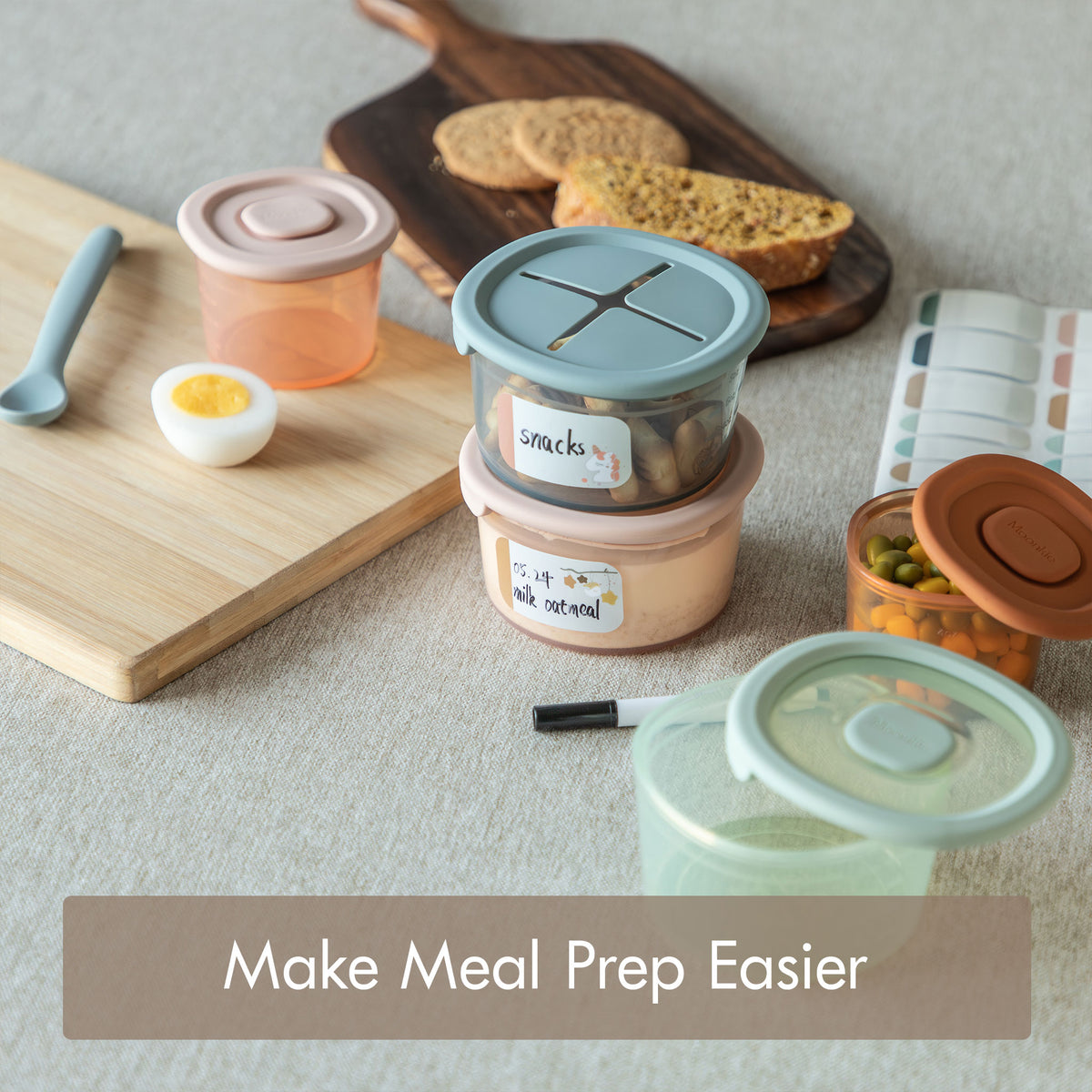
TToddlers can learn to use regular dishes, but having a set of toddler-proof dishes is especially helpful when your attention is divided among multiple kids. Again, opting for the more expensive but super durable and versatile silicone dishes will ultimately give you less worry and more bang for your buck.
Moonkie's Toddler Products
Moonkie's founders experienced all of these frustrations with baby and toddler products for their own kiddos. So, they decided to leave their day jobs to create durable, safe products that make sense in the blessed chaos of parenting.
Why purchase toys and products that will only be useful for one kid or one 3-month phase? Moonkie's design team believes that's ridiculous! That's why every Moonkie product is made with high-quality, easy-to-clean, and long-lasting materials, as well as designs that grow with your little one.
Moreover, the team's strong belief in the benefits of open-ended play and social connection with parents, siblings, and friends is why Moonkie created gorgeous gift sets. Whether you want to connect with your little one through playtime at home, entertain her while traveling, or play at the beach, Moonkie's gift sets have you covered from 0 to 3 and beyond!
In a Nutshell
Toddlers' rapid development is astounding, and it's all parents can do to simply keep up with them. Since playing is essential to their development, choosing toys that entertain and train toddlers for longer than a couple of hours total is vital.
Besides, parents can save significantly in space and finances at home by purchasing quality, open-ended toys and making full use of regular objects inside and outside. What is your toddler's favorite toy?