

The idea of preparing baby food at home makes some parents anxious. Either they think they don't have time, don't know where to start, or think the cost of making baby food is comparable to buying it from the store. Is making baby food worth the trouble?
Preparing and freezing batches of baby food from simple, fresh, puree recipes is an easy way to save money and time. Moreover, homemade baby food can provide a variety of nutrient-dense foods for your little one, expanding her taste and supporting her growth.
With some planning and preparation, you can make and store plenty of baby food! Read on to learn about freezing baby food, how long is too long in the freezer, and seven simple yet flexible baby food recipes to get you started.
Is It Okay to Freeze Homemade Baby Food?
Yes, it is okay to freeze homemade baby food. Making baby food at home is a fantastic way to ensure your baby gets the nutrients they need on a tight budget, and storing it in the freezer is a convenient way to have healthy meals on hand whenever you need them.
Of course, following proper food safety guidelines when preparing and storing homemade baby food is vital to keeping your little one healthy. Here's a list of steps to keep in mind:

How Long is Too Long in the Freezer?
According to the United States Department of Agriculture (USDA), it is safe to freeze homemade baby food for up to one month (source). However, the longer you keep it in the freezer, the more the food's quality and nutritional value decrease.
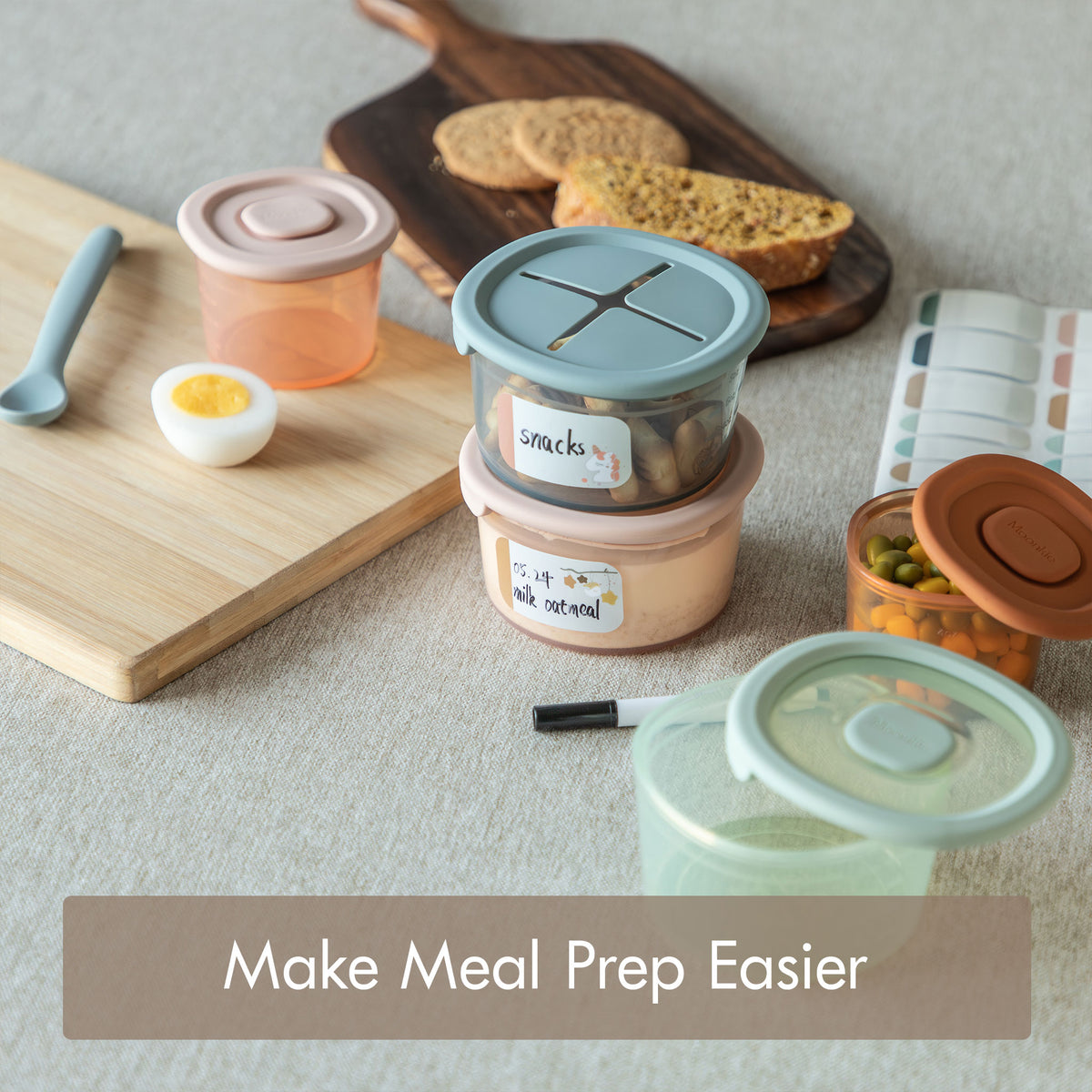
It's an excellent idea to label your containers with the date you made the food and serve it within a couple of months. Otherwise, those containers will get lost in the deep-frozen abyss of forgotten freezer foods.
7 Simple Baby Food Recipes for Freezer Storage
Frozen baby food can be as simple as a single pureed ingredient, like banana, and that's what you may start with at the beginning to identify any food allergies. But once you have three to five single foods that you know your little one can eat, you can blend multiple foods for a better nutrient density.
During the days when I was sleep-deprived, feeding a baby, and chasing a toddler, I relied on simple purees that I could throw together, divvy out, and freeze within five to ten minutes.
If I managed to get a block of time when both kids were napping or being entertained by their grandparents, I would stock the freezer with an entire month's worth of nutritious baby-food purees in less than an hour.
The secret is to utilize the fresh ingredients you already have on hand, so you don't have to make a massive grocery haul across multiple markets.
If you're not one to keep plenty of fresh fruits and veggies stocked each week, then make a list of ingredients you know you can get from your primary grocery store. Keep things simple for your sanity!
Here are my favorite seven simple, fresh baby food recipes that were absolute winners with my littles.
1. Banana and Avocado
This recipe is as simple as can be and requires zero cooking, but babies love it! Even better, it is packed with healthy fats, vitamin B6, vitamin C, dietary fiber, and manganese.
Peel two bananas for every peeled avocado you use and puree until smooth. Add a little breast milk or formula if it's too thick or just to add a few more nutrients.
You can add so many other ingredients to vary this basic recipe:
yogurt
apple puree
mango puree
pineapple puree
sweet potato puree
blueberries
strawberries
peach puree
cinnamon
2. Apple Puree
Simple yet sweet and delightful, this recipe is homemade applesauce. It is delightful for tiny foodies on its own or along with carrot, mango, peach, pear, avocado, banana, cinnamon, ginger, and many other fresh ingredients.
Peel, core, and cut four medium apples into roughly one-inch chunks. Bring about two inches of water to a simmer in a medium saucepan. Add the apple chunks, cover, and steam for fifteen minutes. Then, blend the apples in a blender or food processor until smooth.
If you have a baby food steamer, you'll simply add the apple chunks to the canister and set the dial to steam. Once it beeps, flick the knob over to blend until the apples are a smooth puree. Easy peasy applesauce!
3. Sweet Potato Puree
No list of easy baby food recipes is complete without a sweet potato recipe! Sweet potatoes are terrific with a pinch of cumin or a bit of maple syrup.
Though you could boil or steam them, I preferred roasting them for a different flavor. Take two medium sweet potatoes, scrub them well, and lay them on an aluminum foil-lined baking sheet in the oven at 425°F (218°C) for 45 minutes or until tender.
Let them sit until they cool. Then, scoop the potato out of its skin and put it into a food processor or blender. Blend until it reaches the right consistency for your little one, adding a bit of water if necessary.
Try adding any one or more of the following for new combinations to explore:
apple puree
carrot puree
pea puree
blueberries
pumpkin puree
cooked chicken or beef puree
mango puree
cauliflower puree
pear puree
broccoli and apple puree
steamed kale or spinach puree
cumin
maple syrup
4. Strawberry, Banana, Blueberry Puree
Here is a nifty and nutritious baby food puree that doesn't require any cooking! Simply rinse the berries, cut the tops off the strawberries, peel the bananas, toss them into a blender, and blend until smooth.
You can add any of the following to give this sweet puree even more nutrients without cooking:
a bit of breastmilk or formula
spinach leaves
plain yogurt
peach slices
pineapple chunks
mango slices
avocado slices
ground oats
5. Spinach Puree
Spinach leaves have a slight sweetness that kale and other dark leafy greens lack, making spinach a fantastic leafy greens starter for your baby!
Buy a bag of spinach leaves, chop them up, and freeze them (or buy them already frozen and chopped). A few hours before making the puree, defrost the spinach in its bag on the counter or defrost it in the fridge overnight.
You can also use the ever-helpful microwave's defrost setting or warm water. Once thawed, pour all the spinach and its liquid into the blender. Blend until smooth, adding water when necessary.
Try adding one or more of these to add more variety:
apple puree
sweet potato puree
carrot puree
banana puree
mango puree
pumpkin puree
strawberry puree
nutmeg
garlic
ginger
6. Gingered Carrots and Cauliflower
This one is unique but so surprisingly tasty for littles! You can blend this with ginger and even a bit of cumin for a different flavor.
Peel and chop four or five good-sized carrots into thick discs, and cut about two cups of cauliflower florets.
Steam the carrots in a covered steamer basket over simmering water for five minutes. Add the cauliflower and steam for another ten minutes until tender.
Pour the vegetables into a blender with a pinch of ground ginger and blend until smooth. If it's too thick or not blending well, add a bit of water.
7. Grandma's Chicken Soup Puree
Okay, this may not be your grandma's chicken soup, but it's whatever made-from-scratch chicken soup recipe you like that isn't spicy or overly salty (you can add that after scooping enough out for your baby).
I liked doing different variations of chicken soup from scratch because it was enough for everyone! All I had to do was scoop out a bit for my baby and blend it. Chicken soup is an easy recipe to change up, feed everyone, and provide a nutritious puree for your baby!
How Much Is a Baby Food Serving?
At first, dole out your baby food purees into one-ounce or two-tablespoon compartments (silicone ice cube trays with a lid are perfect for this). After a few weeks, you will need to either increase your block size to 2 ounces (silicone freezer trays are about this size) or thaw 2 or more blocks for 1 meal.
You will find that your little one eats like a bird some days and like a football player on others, and that is okay! Just keep any leftovers in a sealed container in the fridge. Do not reheat or refreeze baby food because there's too much risk for bacterial growth.
How Should I Prepare a Frozen Puree for Mealtime?
You can put a block or two of puree into a container and refrigerate it overnight to thaw. You can also pop it into the microwave or on the stove for a few seconds or until the puree has thawed. Mix it well and test for heat to ensure the puree isn't too hot before serving.
Purees don't always have to be warm. It is actually helpful for your little one to explore food at different temperatures! Some babies prefer warm food, while others prefer cool or even cold purees.
Cool purees may soothe sore gums when your baby is teething, especially if offered in something chewable, like this baby food feeder!
What Should I Try to Include in a Baby Food Recipe?
Don't overthink making baby food! Look at what you already buy to feed yourself first. Fresh fruit, vegetables, and meat are the best options for babies. Start by pureeing and offering one thing at a time. Later, you can combine 1 or 2 ingredients.

Giving your little one pureed baby food made from the fresh ingredients you already buy will lift some weight off your mind.
However, what you offer your little one counts nutritionally. Every bite will help build your little one's brain and body, so don't go for cheap calories like sugar and bread.
How Do I Know My Baby Is Getting Enough Nutrients?
For the first six to twelve months, your baby's primary source of nutrients will be breastmilk or formula. Around six months old, your pediatrician will recommend introducing solids to help your little one get more iron and begin building his sense of taste.
You definitely shouldn't feed your baby purees or solid food until they are 4 months old, so wait until 6 months if you can (source).
Once your baby has begun eating baby food, add as many ingredient colors as possible for each meal (source). If you only give your baby mashed bananas all day, then you will not have given much variety in nutrients, textures, or tastes. For the recipes above, consider providing a different colored puree for each meal.
When your baby grows beyond purees, you can offer the same food you processed for purees in a bigger form. Cooked peas, beans, oats, carrots, chicken, bell peppers, and peeled fruit are all tasty options to explore for their color and texture.
Generally speaking, offering a variety of colors and textures from a range of fresh foods every day will ensure your little one gets exactly what he needs to grow and develop healthily!
What Foods Should I NOT Give My Baby?
Honey contains bacteria that can make a baby sick, so wait until your sweet baby is over twelve months old before letting her experience honey. Keep choking hazards like raw carrots and nuts out of reach as well.
You can incorporate grapes into purees from the get-go, but you should wait until your little one is chewing solids before offering cut grapes. Whole grapes will remain a choking hazard for several years.
Water is excellent for babies venturing into the world of solid foods, but juice should be avoided due to its high sugar content. All your little one needs before twelve months old is water and breast milk or formula.
What If My Baby Doesn't Like Something?
Try again later! Sometimes your baby balks at different tastes or textures, which is hilarious! It is totally normal for your little one to struggle with some foods and textures because she's been used to drinking her food.
Thankfully, babies are curious and explore with their senses. Not only does everything they grasp go straight to the mouth for tasting, but teething causes babies to chew and chomp. Introducing solids starts around the time babies start teething.
So, you may have to introduce a food 8 to 12 times before your little one will swallow it, but that is normal. Just don't decide your baby doesn't like a particular food after two or three rejections — keep offering it!
If you are having trouble getting your baby interested in purees at all, troubleshoot with our guide: Introducing Baby to Solid Food: When to Start, What to Try, and How to Begin.
Are Silicone Food Containers Safe for Freezing Baby Food?
The short answer is yes: food-grade silicone containers are safe for freezing baby food. Plastic containers can have harmful chemicals like BPA, phthalates, and PVC, but food-grade silicone is non-toxic, odorless, and does not leach harmful chemicals into food.

Silicone is a safe and effective material for food storage and preparation, as it is easy to clean, withstands freezing and heating superbly, and flexes rather than cracks. Silicone food containers are durable and long-lasting!
However, not all silicone food containers are created equal. So, ensure you choose high-quality food-grade silicone containers free of fillers and additives.
If you are unsure what to look for, check out our discussion of how silicone is made, the various grades of food-grade silicone, and why it's everywhere in the baby product world here: The Ultimate Silicone Baby Product Guide for Parents.
Moonkie's silicone feeding set is made from 100% platinum food-grade silicone, which is free of BPA, phthalates, and PVC. They are dishwasher safe, can be boiled for sterilization, and can be used repeatedly, giving you more bang for your buck in the long run.
In a Nutshell
Don't let making homemade baby food intimidate you; it's actually a really fun process! When I learned that I could make enough baby food for a month in under an hour, I was sold. Doing so saved us a lot of money, too! So, which puree will be your baby's first taste test?