

Your toddler, who has cut eight teeth with nothing more than a drool bib to show for it, is suddenly chewing the couch arm and waking at night. Nothing in your early-teething playbook seems to touch it. Welcome to molar teething.
The first molars are the flat, wide back teeth that usually arrive between 13 and 19 months, and they have a reputation for a reason: more surface area, more pressure, and a spot your toddler cannot reach to soothe themselves. Here is what molar teething looks like, why it feels bigger than the early rounds, and what actually helps.
When Do Molars Come In?
The first molars typically arrive between 13 and 19 months, with the second molars following between 23 and 33 months. The baby teeth chart shows how they slot into the front-to-back order, and the age-by-age timeline puts them in context.
Signs of Molar Teething
Chewing hard and constantly, often on things much firmer than before.
Cheek rubbing and ear tugging, because the pain radiates outward from the back of the jaw.
Waking at night more than the usual teething pattern.
More drool, more fussiness, sometimes a return of the bedtime drama you thought was done.
A visible bulge in the gum behind the last tooth.
The same rule from the baby months still applies: fever, diarrhea, and a diaper rash are not teething signs, according to the AAP. If those show up, treat them on their own terms, as our guide to teething or something else explains.

Why Molars Feel Different
An incisor is a small, narrow tooth. A molar is a wide grinding surface, and the gum has to open more to let it through. Add a toddler who can point to the hurt but can't explain it, and you get louder nights. The discomfort around each molar usually peaks for a few days when the tooth breaks through.
What Helps a Teething Toddler
A firm, cool teether sized for bigger jaws. The soft baby rings may be outgrown by now; look for solid, chunky shapes a toddler can work at the back of the mouth. See the picks in our guide to teething toys by age and material.
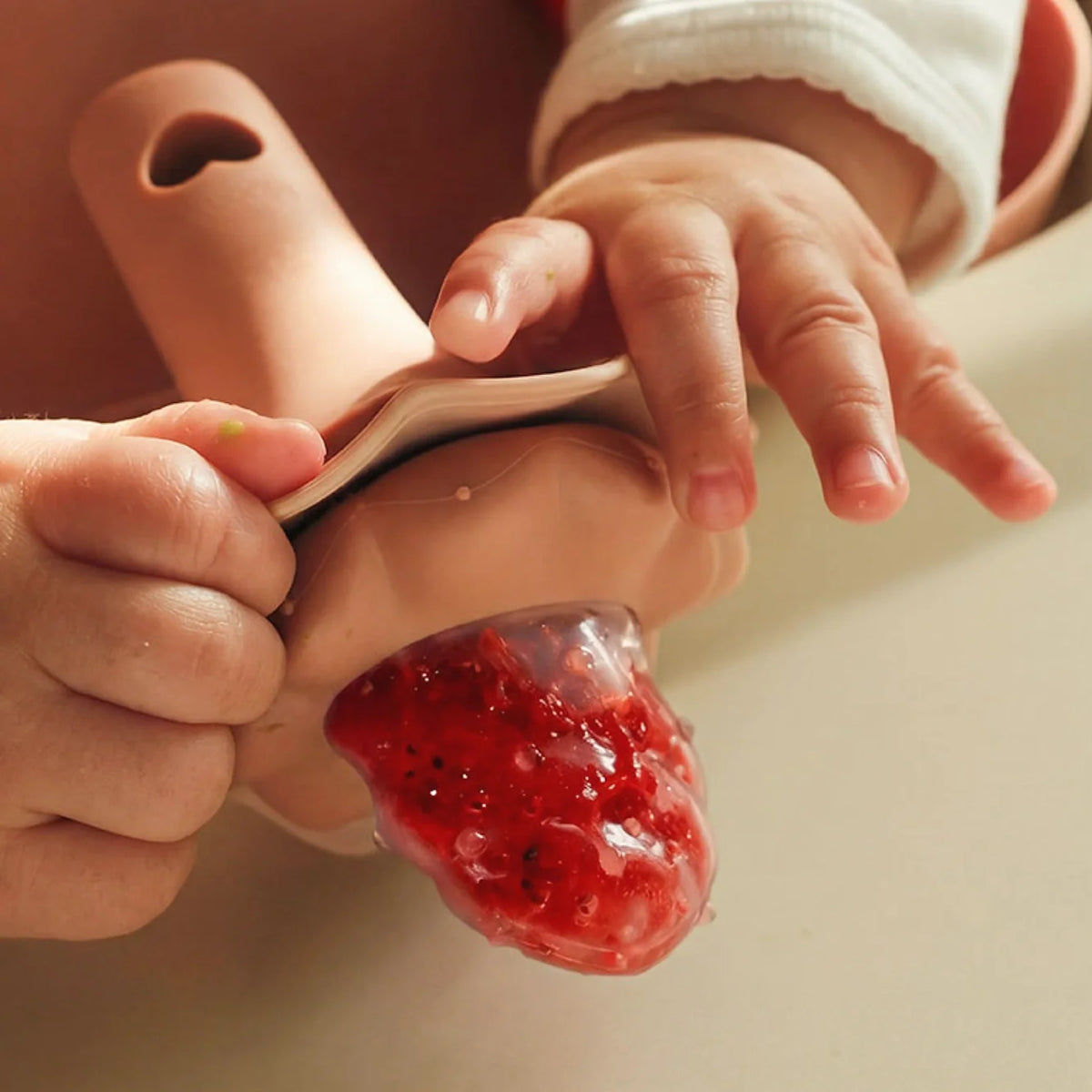
Cold foods: chilled fruit pieces in a food feeder, or a cold, smooth yogurt on a spoon. Frozen fruit is fine inside a silicone food feeder, where it stays off the gums. Nothing frozen solid held directly in the mouth.
Gum rubs still work, with a clean knuckle on the sore spot.
A word with your pediatrician if nights are rough: ask about acetaminophen and the right dose for your toddler's weight.
Distraction at full toddler power: a new activity beats any product at this age.
Keep the sleep routine steady through the rough patch; comfort without new habits. More in teething remedies.
When to Call Your Pediatrician
Call if your toddler has a fever, if pain seems to stop them eating and drinking, if one cheek swells or the gum looks infected, or if anything simply seems off. Toddlers catch more bugs than babies do, and molars get blamed for a lot of them.
Frequently Asked Questions
What Are the Signs of Molar Teething?
Hard constant chewing, cheek rubbing, ear tugging, night waking, and a visible bulge in the gum behind the last tooth are the classic signs of molar teething. Each molar usually bothers a toddler for a few days around the moment it breaks through.
When Do First Molars Come In?
First molars typically arrive between 13 and 19 months, with second molars following between 23 and 33 months, according to the ADA's eruption charts. Your toddler's timing may differ by a few months either way. The baby teeth chart shows the full front-to-back order and the typical window for every tooth.
Is Molar Teething Worse Than Regular Teething?
Many parents say yes, and there's logic to it: molars are wide, flat teeth, so the gum opens more as they come through. Each toddler is different, though, and some barely notice. The fussiest stretch tends to last a few days per tooth. Crying that goes on well beyond that is worth a call.
Can a Teething Toddler Have a Fever?
No. According to the AAP, fever isn't a teething sign at any age. A fever deserves a call to your pediatrician, especially for toddlers in group care who pick up plenty of bugs. If your toddler also has diarrhea, or fewer wet diapers than usual, mention that on the call too.
What Can I Give a Toddler for Molar Teething Pain?
Non-medicine options first: a firm cool teether sized for bigger jaws, cold foods, gum rubs with a clean finger, and distraction. Ask your pediatrician before any pain reliever, and skip teething gels, tablets, and necklaces entirely, as our cautionary guide explains.
Do Molars Come In Pairs?
Often, yes: one on the left and one on the right, though not always on the same day. Two molars arriving close together can make for a rough week, followed by a cheerier toddler. A few days apart is just as common, so don't worry if your toddler's pair doesn't match.
The Last Big Push
Second molars are the final act of baby teething. Once they are in, the chart is full and the tooth fairy's paperwork begins. Until then: firm teethers, cold snacks, and steady bedtimes.
Keep reading: Teething 101: Signs, Symptoms and What Actually Helps · When Do Babies Start Teething? An Age-by-Age Timeline · Baby Teeth Chart: When Each Tooth Comes In (Free Printable) · Teething Remedies: Safe Ways to Soothe a Teething Baby · Browse our teething collection
This article is for general information and isn't a substitute for advice from your pediatrician or dentist.