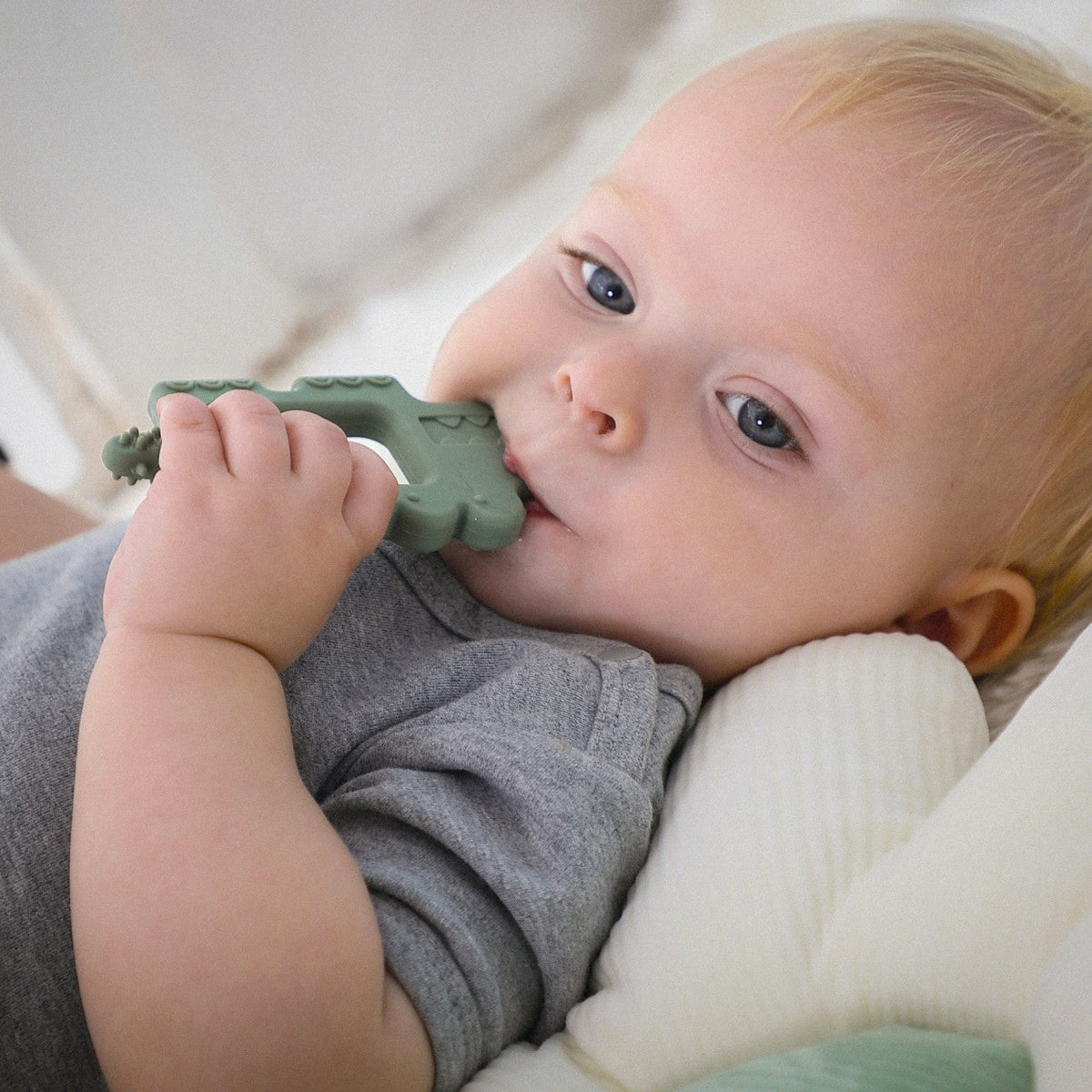


It's a perfectly ordinary Tuesday, and yet your baby has been chewing the high chair strap for ten minutes straight. The drool bib is on its second change. Your baby is unsettled in a way you can't quite name, and you find yourself asking the question every parent asks at some point: is this teething?
Often, yes. Teething is the slow, ordinary arrival of twenty baby teeth, and most babies show at least a few signs of teething along the way. Some show every sign in the book. Some show almost none. This guide walks through the classic signs of teething, the symptoms that mean something else is going on, and the simple things that actually help sore gums.
Signs of Teething at a Glance
Drooling more than usual, sometimes a lot more
Chewing and biting fingers, toys, crib rails, and your shoulder
Rubbing or tugging at the gums, or pressing toys against them
Tender, swollen gums where a tooth is on the way
Extra fussiness or clinginess for a few days
Sleep and appetite off their usual rhythm for a short stretch
A note before the list becomes a law: many babies show very few signs of teething, and each tooth usually only causes a few days of bother when it breaks through. If your baby seems fine, they probably are.

The Classic Signs of Teething, One by One
Drooling
Teething turns on the taps. The extra saliva is a normal part of the process, and so are the damp collar and the endless bib changes that come with it. Pat the skin dry rather than rubbing, and keep a soft cloth nearby.
Chewing on Everything
Counter-pressure feels good on a sore gum, which is why the remote, the stroller strap, and your knuckle all become targets. Offer something made for the job: a clean teething ring or teether your baby can grip. Easy-to-hold silicone shapes work well for young babies.
Rubbing and Tugging at the Gums
You may notice your baby pressing a finger, a toy, or even your hand against one spot in their mouth. That is often exactly where the next tooth will appear. A clean finger rubbing the gum in small circles can bring surprising relief.
Tender, Swollen Gums
A tooth working its way up can make a patch of gum look red, puffy, and hard. It may bother your baby for a few days, then settle until the next tooth starts its journey.
A Change in Mood
Some extra fussiness, clinginess, or a shorter patience span is a common teething symptom, especially in the day or two before a tooth cuts through. Comfort is the main offering here: holds, distractions, and a cool teether to work on.
Sleep and Appetite Off Their Rhythm
A teething baby may snack less, nurse differently, or wake more for a few nights. It usually passes with the tooth. If it lasts more than a few days, something else may be at play. For the full age-by-age picture, see when do babies start teething.
What Teething Does Not Cause
This part matters, so it gets its own section. According to the American Academy of Pediatrics, teething does not cause fever, diarrhea, a diaper rash, or crying beyond the usual fussiness, and it doesn't make it harder for babies to fight off a cold or the flu. Those symptoms have other causes, and some of them deserve a call to the doctor.
Teething also tends to get blamed for things it didn't do. A fever, a diaper rash that keeps spreading, or crying that cannot be soothed deserves its own look, not a teething ring. Diarrhea that lasts more than a day is worth a call too. Our guide to teething or something else walks through fever, rash, and diarrhea one by one.
What Actually Helps Sore Gums
You don't need much. Pediatric guidance points to a short, sensible list:
A clean teether or damp washcloth, chilled. Fridge-cool is enough. Whatever you chill, never offer anything frozen solid.
A gum rub with a clean finger.
Extra cuddles, a change of scene, and a little patience.
A dry chin and a fresh bib for the drool.
Cold water in a sippy cup, once your baby is past 6 months.
A word with your pediatrician about pain relief such as acetaminophen if the discomfort is rough.
What to skip: numbing gels (benzocaine or lidocaine), homeopathic tablets and gels, liquid-filled teethers, and teething necklaces made of amber, wood, marble, or silicone. The AAP and FDA advise against all of them, and we explain why in what pediatricians say about teething tablets, gels, and necklaces. For a deeper dive, see teething remedies: safe ways to soothe a teething baby.
When to Call Your Pediatrician
Teething is a normal part of babyhood, and most of it can be handled at home with a cool teether and some patience. Call your pediatrician if:
Your baby has a fever. The AAP says fever isn't a teething symptom.
Your baby is under 3 months old with a temperature of 100.4°F (38°C) or higher. Call right away.
Diarrhea lasts more than a day, or vomiting shows up.
The crying is hard to soothe or lasts longer than usual.
Something just feels off. Trust that instinct; you know your baby.
Frequently Asked Questions
What Are the Signs of Teething?
The most common signs of teething are drooling, chewing on fingers and toys, rubbing or tugging at the gums, tender or swollen gums, and a few days of extra fussiness. Some babies show very few signs, and each tooth usually only bothers them for a short stretch.
When Do Teething Symptoms Start?
Teething signs can start around 3 months, well before the earliest tooth, which usually arrives between 6 and 10 months. Symptoms tend to come and go with each new tooth until the full set of 20 is in, around age 3. The age-by-age timeline has the full picture.
Can Teething Cause a Fever?
Not according to the AAP: fever isn't a sign of teething. A teething baby may feel a little warm, but a measured fever points to something else, so check with a thermometer. Call your pediatrician for any fever, and right away for 100.4°F (38°C) or higher under 3 months old.
How Long Do Teething Symptoms Last?
Each tooth tends to cause a few days of discomfort when it breaks through. The overall teething window runs from about 3 months, when the earliest signs can appear, until the second molars come in at roughly 2 to 3 years.
Do All Babies Show the Same Teething Signs?
Not at all. Some babies drool rivers and chew everything in sight, while others cut teeth with barely a whimper. Both are normal, and neither says anything about how the teeth will turn out. The teething timeline your baby follows is their own, so compare notes with other parents lightly.
What Helps a Teething Baby?
Simple comforts: a clean, chilled teether or damp washcloth to chew, a rub on the gums with a clean finger, extra cuddles, and a dry chin for all that drool. Skip numbing gels, homeopathic tablets, and teething necklaces. Our teething remedies guide has the full list, and our teething collection has teethers made for tiny hands.
However the Signs Show Up
Whether your baby drools through six bibs a day or cuts a tooth before you notice anything at all, you're doing fine. Keep a cool teether within reach, keep the pediatrician's number where you can find it, and take the signs as they come.
More Teething Guides
When Do Babies Start Teething? An Age-by-Age Timeline: what to expect, month by month
Baby Teeth Chart: When Each Tooth Comes In (Free Printable): the printable tooth-by-tooth chart
Teething Remedies: Safe Ways to Soothe a Teething Baby: ways to soothe sore gums
Is It Teething or Something Else? Fever, Rash, Diarrhea, and When to Call: fever, rash, diarrhea, and when to call
Best Teething Toys for Babies (by Age and Material): teethers by age and material
Teething Rings vs Teethers: How to Choose: how the three styles differ
Teething Tablets, Gels and Necklaces: What Pediatricians Say: what pediatricians say to skip
Molar Teething: Why the Back Teeth Hurt More (and What Helps): why the back teeth can feel harder
Teething Pacifiers: When a Pacifier Soothes and When a Teether Works Better: when sucking soothes and when to switch
Teething Biscuits and What to Feed a Teething Baby: chilled foods and biscuits
When to Start Brushing Baby Teeth (and How to Do It Without Tears): starting the toothbrush routine
This article is for general information and isn't a substitute for advice from your pediatrician or dentist.
Sources
American Academy of Pediatrics, HealthyChildren.org: Teething Pain Relief and Fever in Babies
American Dental Association, MouthHealthy: Baby teeth eruption charts
KidsHealth (Nemours): Teething tots