

At 2 a.m., with a crying baby and a phone in hand, the sponsored results can look like answers. Teething tablets promise fast calm. Numbing gels promise instant relief. An amber necklace promises it all, naturally, while looking adorable in photos.
Pediatricians and the FDA see these products differently from the way the marketing does. Here is what the warnings say, why the AAP advises against them, and what to use instead.
Teething Tablets: Homeopathy With a Warning Label
Homeopathic teething tablets once sat in every pharmacy's baby aisle. Then the FDA found inconsistent amounts of belladonna, a toxic substance, in some products, and reports of babies who became seriously ill after use followed. The FDA urged parents not to use them, and one well-known brand left the market.
The core problem is manufacturing control: when the amount of an active ingredient isn't consistent, a label that says natural tells you little about what is in the bottle. The AAP advises against homeopathic teething tablets and gels, and the FDA's warnings point the same way.
Teething Gel: Why Numbing Isn't the Answer
Benzocaine, the numbing agent in many teething gels, has been linked to methemoglobinemia in young children, a rare but serious condition that reduces how much oxygen the blood can carry. The FDA warns against benzocaine oral products for children under 2 and has pressed manufacturers to stop marketing them for teething babies.
The AAP also advises against products with lidocaine for teething, because swallowing too much can cause serious harm. A chilled teether does the job without either ingredient.

Amber Teething Necklaces: Pretty, Popular, and Not Recommended
The claim behind amber teething jewelry is that beads release a pain-relieving acid when warmed by the skin. That claim has no solid evidence behind it, while the documented concerns are concrete: strangulation if the necklace catches or tightens, and choking if a bead comes loose. The American Academy of Pediatrics and the FDA advise against them.
This applies to necklaces worn by the baby and to necklaces worn by a parent for the baby to chew. It applies to bracelets and anklets too, and to amber, wood, marble, and silicone alike. Teething jewelry offers no proven benefit and carries documented strangulation and choking concerns.
What to Use Instead
The safe alternatives are also the boring ones, which is exactly their charm:
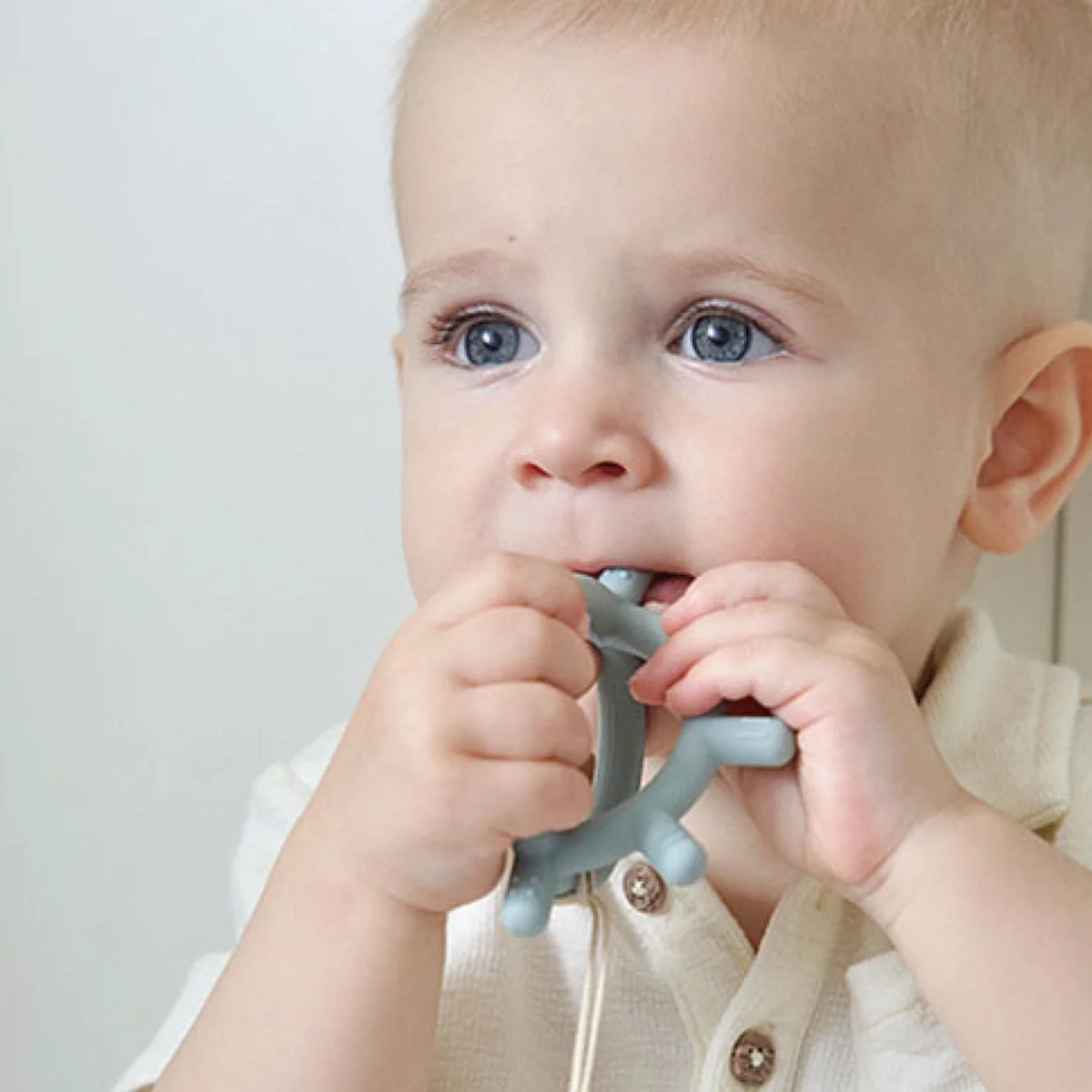
A clean, cool teether: silicone rings and shaped teethers, chilled in the fridge.
A cold washcloth to chew on.
A clean-finger gum rub.
Cold soft foods if your baby is on solids.
A call to your pediatrician, if your baby seems very uncomfortable: they can advise on pain relief such as acetaminophen.
Time and cuddles: each tooth's fussiest stretch usually lasts only a few days.
Our teething remedies guide has the full safe list, and our teething collection has teethers made for tiny hands.
If You Already Used One of These Products
You are not alone: these products are everywhere, and plenty of caring parents have tried them. Stop using them, and watch your baby. Call your pediatrician or Poison Help (1-800-222-1222) right away if you notice unusual sleepiness, pale or grayish skin, blue lips, or breathing that looks off after using a tablet or gel.
Frequently Asked Questions
Are Teething Tablets Safe?
No. The FDA has warned against homeopathic teething tablets after finding inconsistent levels of belladonna, a toxic substance, in some products, and after reports of serious illness in babies. The AAP also advises against homeopathic tablets and gels. A chilled teether or a clean-finger gum rub is a simpler place to start.
Is Teething Gel Safe for Babies?
Numbing gels with benzocaine are not recommended for children under 2: the FDA links them to methemoglobinemia, a rare but serious condition that lowers the oxygen in the blood. The AAP also advises against lidocaine products for teething. For sore gums, a chilled teether or a clean-finger rub is the usual starting point.
Do Amber Teething Necklaces Work?
There is no good evidence that amber beads release anything that relieves teething pain. The AAP and FDA advise against teething necklaces, bracelets, and anklets of any material, including amber, wood, marble, and silicone, because a baby can be strangled or choke on them. A chilled teether is a better choice.
What About Teething Jewelry Worn by a Parent?
The same advice applies. A baby can grab and mouth a parent's necklace, which raises the same strangulation and choking concerns, so the guidance covers all teething jewelry, whoever wears it. If you like having something for your baby to hold, ask your pediatrician what they would suggest.
What Actually Helps a Teething Baby?
Simple comforts: a clean, chilled teether to chew, a damp washcloth, a rub on the gums with a clean finger, cold water in a sippy cup after 6 months, and extra cuddles. If your baby seems very uncomfortable, ask your pediatrician about acetaminophen. These are the options AAP guidance supports.
What Should I Do If My Baby Had a Teething Tablet or Gel?
Stop using the product and watch your baby. If you notice unusual sleepiness, pale or blue-tinged skin, or breathing changes, or you're worried at all, call your pediatrician or Poison Help (1-800-222-1222) right away. Keep the packaging handy, since it helps them see exactly what your baby had.
The Simple Answer Wins
No tablet, gel, or bead has been shown to beat a chilled teether and a calm adult. Your baby does not need a miracle product. They need you, plus one of the simple comforts on the list above.
Keep reading: Teething 101: Signs, Symptoms and What Actually Helps · When Do Babies Start Teething? An Age-by-Age Timeline · Teething Remedies: Safe Ways to Soothe a Teething Baby · Best Teething Toys for Babies (by Age and Material)
This article is for general information and isn't a substitute for advice from your pediatrician or dentist.
Sources
U.S. Food and Drug Administration: Benzocaine oral drug products safety communication; Homeopathic teething tablets safety communication
American Academy of Pediatrics, HealthyChildren.org: Teething Pain Relief
American Dental Association, MouthHealthy: Baby teeth eruption charts