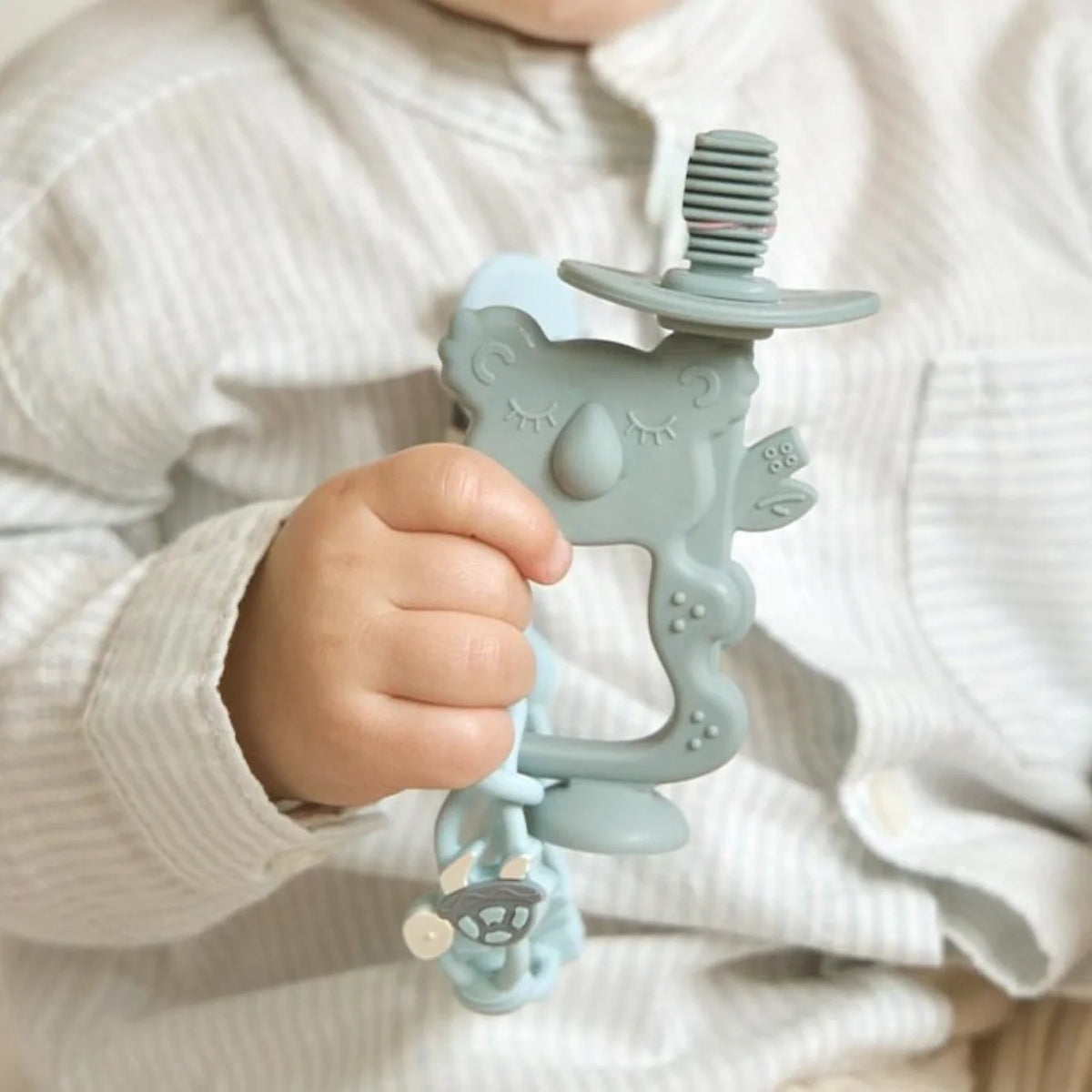


The registry list said 'teething toys' and someone generously bought four of them. One is a ring, one looks like a tiny banana, one fits on a hand like a boxing glove, and one is, as far as you can tell, a decorative rattle. Which one is for what?
Teething rings, hand-held teethers, and teething mittens all soothe the same urge with different ergonomics. The right choice depends mostly on your baby's age, grip, and chewing style. Here is how the three styles differ, and what to look for in any of them.
What Is a Teething Ring?
A teething ring is the classic: a closed loop your baby holds in one fist and works against the gum with the other. The ring shape does two jobs: it is nearly impossible to drop, and it lets a young baby aim pressure precisely where the gum hurts.
Rings shine in the early months, when grip is developing and the front teeth are the target. See our teething rings for an example of the style done in food-grade silicone.

What Is a Teether?
'Teether' is the umbrella term for anything made for chewing, but in the store aisle it usually means a hand-held shape: a banana, a leaf, an animal, a set of stacking rings. Hand-held teethers give older babies more texture variety and more reach toward the back of the gum line, where molars will eventually arrive. The banana teether style, with soft brush-like bristles at one end, adds a light gum-massage effect many babies enjoy.

What About Teething Mittens?
Teething mittens strap onto a baby's hand so that the chewing instinct always has a target, and they protect tiny fists from being gummed raw. They suit the very early months, when babies cannot reliably hold anything but can reliably find their own hand. Most babies outgrow them once they can grip on purpose.
Teething Rings vs Teethers: The Deciding Factors
Factor |
Rings |
Hand-held teethers |
Mittens |
Age range |
3 months onward, through toddlerhood |
6 months onward, especially molars |
0-4 months |
Grip demand |
Low: loops onto the fist |
Medium: needs a deliberate hold |
None: it is worn |
Target zone |
Front gums |
Front to back |
Whatever the hand finds |
Cleanability |
Simple: one solid piece |
Varies: watch seams and bristles |
Fabric: hardest to keep clean |
What to Look for in Any Teething Toy
One solid piece or securely fused parts: no seams that split, no liquid or gel inside.
Food-grade material with certifications you can check, not just a smiling avocado.
Easy cleaning: dishwasher-safe or boilable silicone earns its keep.
The right size: big enough that it can't fit all the way into your baby's mouth, small enough for their hands to hold.
No cords or clips long enough to wrap around a neck.
Cleaning and Care
A teether lives in your baby's mouth all day, so treat it like cutlery, not like a toy: wash before use, clean on a regular schedule, and retire it as soon as you see a tear or puncture. Our full material-by-material guide to disinfecting baby toys covers silicone, rubber, and wood.
Frequently Asked Questions
What Is the Difference Between a Teething Ring and a Teether?
A teething ring is a closed loop designed to be held in the fist and pressed against the gums. 'Teether' is the general name for chewing toys, usually hand-held shapes with varied textures. All rings are teethers; not all teethers are rings.
Which Is Better for a Young Baby: Ring or Teether?
For babies under about 6 months, rings and mittens usually win because they need less deliberate grip. As babies get older and want to reach the back of the gums, shaped hand-held teethers become more useful. Either way, watch what your baby reaches for and follow their lead.
Are Banana Teethers Good for Babies?
The banana style is popular because the soft bristle end massages the gum while your baby chews. Look for food-grade silicone and one-piece construction, check the bristles for wear every time you wash it, and replace it as soon as the bristles look frayed or loose.
Do Teething Mittens Work?
They work for what they are: a way to let a very young baby chew without needing to hold anything. Once your baby can grip objects on purpose, rings and hand-held teethers usually take over. Wash mittens often, since fabric holds drool, and check that nothing is loose.
How Do I Clean Teething Rings and Teethers?
Solid silicone pieces can usually be washed with mild soap and water, run through the dishwasher, or boiled, depending on the maker's instructions, so check the care label. Inspect each piece regularly and retire anything with tears, punctures, or loose parts. Wood and fabric need different care.
How Many Teethers Does a Baby Need?
Two or three in rotation covers most families: one in use, one chilled, one in the wash. More than that is storage, not strategy. If you're gifting or registering, a ring, a hand-held shape, and a mitten give your baby a little variety as their chewing changes.
Rings Early, Shapes Later
Start with what the fist can hold. Graduate to what the jaw demands. And whatever you choose, keep it clean, keep it cool, and keep an eye on wear.
Keep reading: Teething 101: Signs, Symptoms and What Actually Helps · When Do Babies Start Teething? An Age-by-Age Timeline · Best Teething Toys for Babies (by Age and Material) · Teething Remedies: Safe Ways to Soothe a Teething Baby · Browse our teething collection
This article is for general information and isn't a substitute for advice from your pediatrician or dentist.